Before Summer Demand Peaks, Your HVAC System Has Already Given Clues
Unusual noise, uneven temperatures and repeated resets are not minor inconveniences. They are often early signs that an HVAC system is under strain.
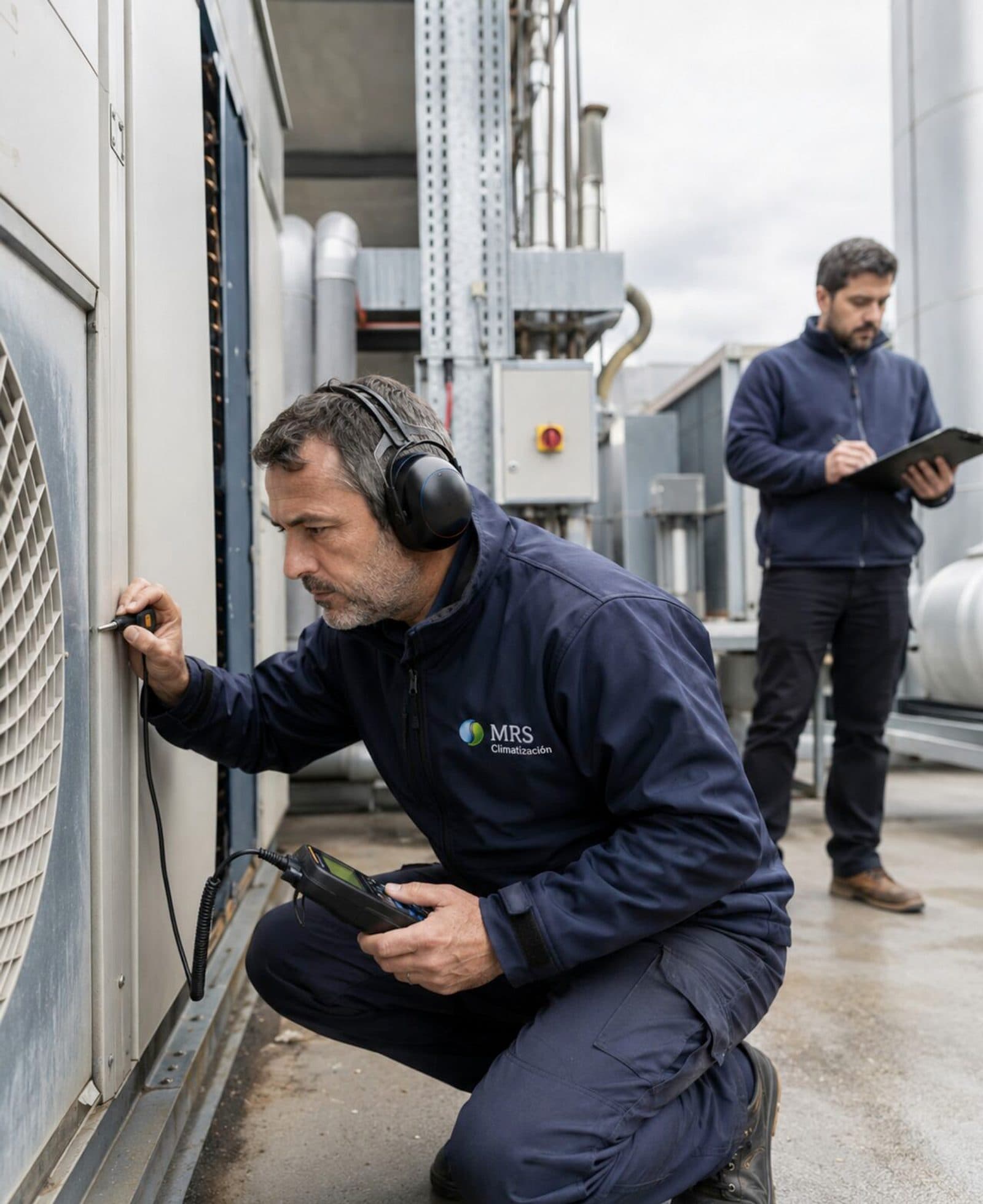
Before summer demand reaches its peak, most HVAC systems have already provided clues about their condition.
The signs are often familiar: an unusual noise that was not there before, temperatures that feel inconsistent from one area to another, slow recovery after start-up, or controls that seem to need repeated resets. In a busy building, these symptoms can be easy to dismiss. If the system is still running, it may feel practical to leave the issue until later.
However, these are rarely just minor inconveniences. They can be early warning signs that the system is already working harder than it should. When the weather is mild and the building is under normal demand, those signs may not appear urgent. But once operating hours extend, internal loads increase and occupants expect consistent comfort, small problems can quickly become disruptive.
For building managers, facilities teams and business owners, the period before peak summer demand is an important opportunity. A planned inspection can identify developing faults before they lead to breakdowns, comfort complaints or avoidable callouts.
Why early warning signs matter
HVAC systems are designed to maintain comfort and stable conditions across a building. To do that reliably, they depend on several elements working together: mechanical components, airflow, controls, refrigerant circuits, electrical connections, filters, sensors and user settings.
When one part of the system begins to underperform, the rest of the system may compensate for a while. That is why a fault may not cause immediate failure. Instead, it may appear as a subtle change in performance.
A fan bearing may begin to make more noise. A blocked filter may reduce airflow. A sensor or control issue may cause irregular cycling. A unit may take longer than expected to bring an area down to temperature. These symptoms can seem manageable in isolation, but they indicate that the system is no longer operating as smoothly as it should.
The real concern is that summer demand leaves less margin for error. A system that is already under strain in moderate conditions may struggle when it needs to run for longer periods or respond to higher cooling loads. What was previously an occasional issue can become a recurring operational problem.
Common signs your HVAC system should be checked
Not every symptom points to a serious fault, but changes in system behaviour should not be ignored. The following signs are worth investigating before demand increases.
Unusual noise
New or worsening noise can indicate that a component is loose, worn, misaligned or operating under stress. Rattling, grinding, buzzing or vibration may not stop the system from running immediately, but they can suggest that a mechanical or electrical issue is developing.
Noise is also useful because it is often noticed before performance drops significantly. If staff, occupants or maintenance teams report that a unit sounds different, it is worth taking seriously.
Uneven temperatures
Uneven temperatures across a building can be caused by several factors, including airflow restrictions, poor balancing, control issues, blocked grilles, dirty filters or equipment that is not responding correctly.
In some cases, one area may feel too warm while another is overcooled. This can lead to occupants adjusting controls repeatedly, which may make the system work less efficiently and create further inconsistency. A planned inspection can help identify whether the problem lies with distribution, controls or the equipment itself.
Slow recovery after start-up
If a system takes longer than usual to achieve the desired temperature after start-up, it may be a sign that it is losing capacity or working against restrictions. This might be linked to airflow, refrigerant charge, heat exchange performance, controls or general maintenance condition.
Slow recovery can become especially problematic during hot periods, when the system needs to bring spaces back to comfort quickly and maintain that comfort throughout the day.
Repeated resets or cycling
A system that frequently needs resetting, cuts out unexpectedly or cycles on and off more often than normal should be investigated. Repeated resets are not a long-term solution. They are a sign that something is causing the system to stop, protect itself or operate outside its intended pattern.
Control issues, sensor faults, electrical problems or component strain can all contribute to this behaviour. Leaving the cause unresolved may increase the risk of disruption when demand is highest.
Why peak season is the wrong time to discover problems
The most demanding test for an HVAC system rarely comes during mild weather. It comes when the building needs consistent comfort for more hours, with little tolerance for downtime.
During summer, cooling systems may need to deal with higher external temperatures, internal heat gains, changing occupancy levels and longer operating schedules. Any existing weakness is more likely to become visible. Unfortunately, this is also the time when access to reactive support may be under more pressure, as many buildings experience similar issues at once.
A fault that could have been addressed during a planned visit may become a disruptive callout. Depending on the issue, it may affect comfort, operations, staff productivity, customer experience or temperature-sensitive processes.
This is why preparation matters. Planned maintenance does not remove every possible risk, but it does improve visibility. It gives building managers a clearer understanding of the system’s condition and allows action to be taken before the busiest period.
What a planned pre-summer inspection can help identify
A planned HVAC inspection before peak season is not just a box-ticking exercise. It is an opportunity to check how the system is operating, whether key components are showing signs of wear, and whether performance is being affected by avoidable issues.
Typical areas of attention may include component condition, airflow, filters, coils, controls, electrical connections, operating pressures, temperature performance and signs of leakage, vibration or abnormal noise. The exact checks will depend on the type of system and the building’s requirements.
The value lies in finding developing issues early.
Worn components can be identified before they fail. Airflow problems can be addressed before they create comfort complaints. Control issues can be investigated before they cause repeated cycling or nuisance shutdowns. Efficiency losses can be reviewed before they contribute to higher running costs.
For facilities teams, this also supports better planning. Instead of reacting under pressure, they can prioritise actions, schedule works more sensibly and reduce the likelihood of unexpected disruption during peak demand.
Reactive maintenance can cost more than it first appears
Reactive maintenance may feel quicker in the moment. If a system is still running, it can seem efficient to wait until a clear fault appears. The problem is that reactive work is usually less predictable.
When equipment fails during a busy period, the priority becomes restoring operation as quickly as possible. That can mean urgent attendance, operational disruption, temporary workarounds and less flexibility over scheduling. If parts are required, delays can become more difficult to manage because the building is already affected.
There is also the risk that a fault left unresolved may place additional strain on other parts of the system. A simple issue can sometimes contribute to wider performance problems if it is allowed to continue.
Planned maintenance takes a different approach. It aims to identify and address issues while there is still time to manage them properly. It supports continuity, reduces uncertainty and helps keep the system in a more reliable condition.
Comfort, efficiency and reliability are connected
Comfort complaints are often the first visible sign that an HVAC system is not performing as intended. But comfort is only part of the picture.
When a system struggles to maintain temperature, runs longer than necessary, cycles repeatedly or operates with restricted airflow, it may also use more energy than required for the conditions. Efficiency losses are not always dramatic at first, but they can build over time if the cause is not addressed.
Reliability, comfort and efficiency are closely connected. A well-maintained system is better placed to deliver stable conditions, operate as intended and avoid unnecessary strain. For commercial and industrial buildings, that matters not only for occupant comfort, but also for operational confidence.
What building managers should do before summer demand increases
If you manage a building, now is the right time to pay attention to what your HVAC system is telling you.
Start by reviewing any recent complaints, faults or patterns. Have occupants reported hot or cold areas? Has a unit become louder? Are resets becoming more common? Does the system take longer to recover after start-up? Have maintenance teams noticed vibration, alarms or irregular operation?
These observations are valuable. They help direct attention to areas that may need inspection and give technicians a clearer starting point.
Next, consider whether the system has had a recent planned maintenance visit and whether any recommendations are outstanding. If issues were previously noted but deferred, it may be sensible to review them before peak season.
Finally, schedule an inspection early enough to allow time for any follow-up works. The closer a building gets to the busiest months, the less convenient it becomes to manage avoidable disruption.
Summer reliability is preparation, not luck
HVAC reliability in summer is not simply a matter of hoping the system will cope. It depends on preparation, maintenance and early action when warning signs appear.
Unusual noise, uneven temperatures, slow recovery and repeated resets are not signals to ignore until the workload becomes heavier. They are signs that the system may already be under strain.
For MRS Climatización, supporting reliable HVAC, electrical and industrial refrigeration systems means focusing on practical technical solutions, planned maintenance and timely intervention. Before peak summer demand arrives, a well-timed inspection can make the difference between controlled preparation and reactive disruption.
Small warnings are easier to manage before they become urgent callouts. The best time to understand your HVAC system’s condition is before the hottest days test it.
Jason Leven
MRS Climatización