What Property Managers Should Ask Before Approving an Electrical Upgrade
Electrical upgrades are not simple replacement jobs. For property managers, asking the right questions can reduce disruption, improve safety and protect the long-term performance of the building.
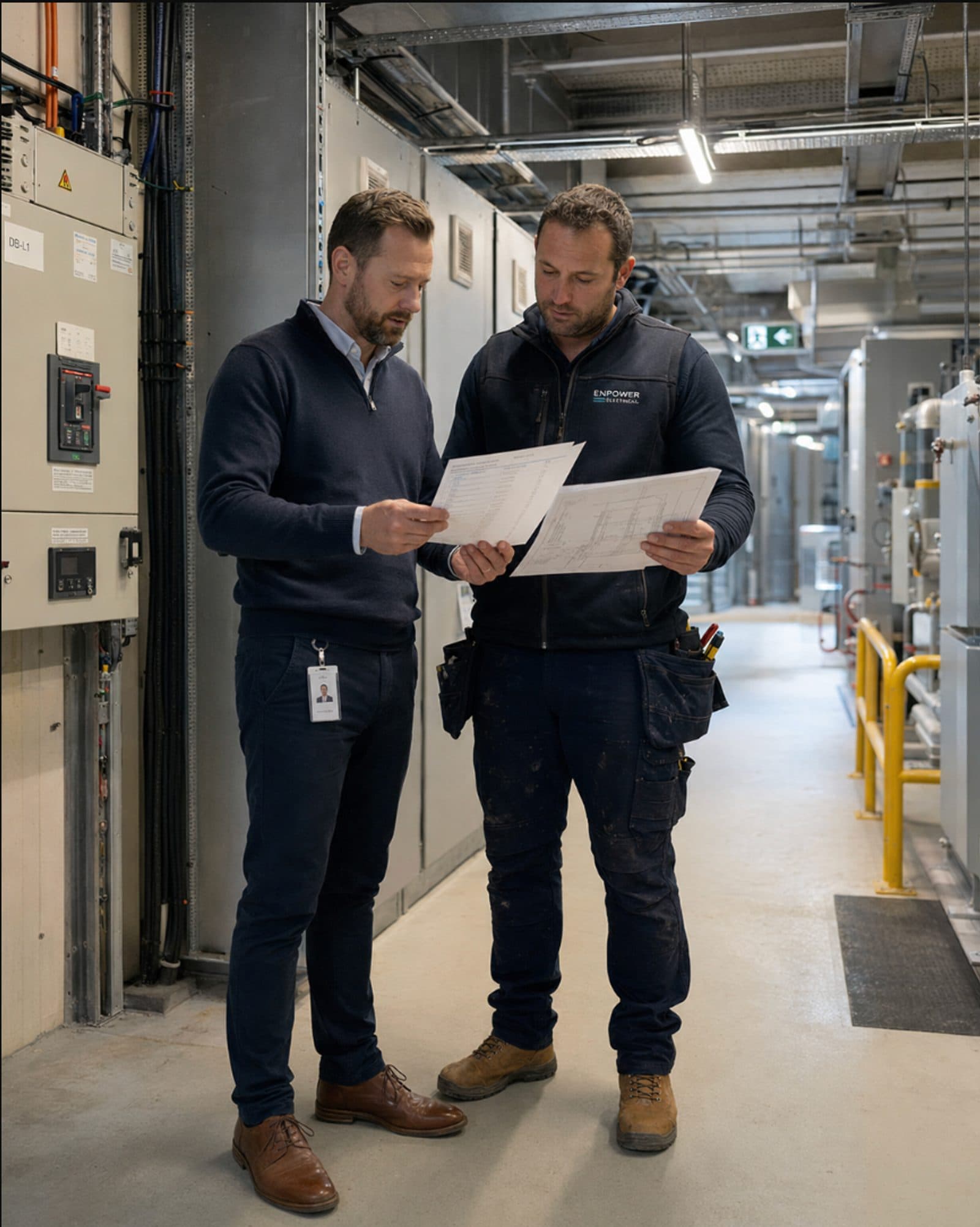
Approving an electrical upgrade can look straightforward on paper. A proposal is submitted, a quote is reviewed and the works are scheduled. In practice, however, electrical upgrades affect far more than the equipment being replaced.
For property managers, the key question is not only whether the cost looks reasonable. It is whether the proposed design suits the building, its current use, its future needs and the other systems that depend on a reliable electrical infrastructure.
A common mistake is to treat an upgrade as a simple like-for-like replacement. That may be appropriate in some circumstances, but it should not be assumed. Buildings change over time. Tenants change. Operating hours change. New equipment is added. HVAC systems, lighting, controls, refrigeration and safety systems can all place different demands on the electrical installation.
Before approving any electrical upgrade, property managers should ask questions that reveal whether the proposal fits the building, not just the budget.
Start with the existing electrical load
The first question is simple: what is the current load on the system, and how close is the existing installation to its maximum capacity?
Without this information, it is difficult to judge whether an upgrade will solve the right problem. A building may already be operating close to its limits, especially if additional equipment has been added over the years. In other cases, the issue may not be total capacity but how loads are distributed across the installation.
Understanding the current load helps to clarify whether the proposed upgrade is sufficient, whether additional headroom is needed and whether there are risks that could affect safety or reliability. It also helps to avoid approving works that seem adequate at the time but quickly fall short as the building's demands increase.
Property managers do not need to carry out the technical assessment themselves. They should, however, expect a clear explanation of the current situation and how the proposed upgrade responds to it.
Consider how the building may change
An electrical upgrade should not reflect only how the building is used today. It should also take into account realistic changes in use over the coming years.
For example, will the building have more tenants? Will occupants bring in different equipment? Could operating hours change? Is there likely to be demand for electric vehicle charging, additional cooling, new lighting, upgraded HVAC equipment or more digital controls?
These questions matter because electrical infrastructure usually supports a wide range of building services. If the use of the building changes shortly after an upgrade, a design based solely on current requirements can create avoidable limitations.
This does not mean every upgrade should be oversized or designed for every possible future scenario. It means the decision should be made with a clear understanding of likely future demands. A well-prepared proposal should explain what the upgrade allows, where its limits lie and whether further changes might be needed if the use of the building evolves.
Check whether the proposal meets current requirements
Another important question is whether the proposal meets current regulatory requirements or simply replaces existing components with equivalent ones.
A like-for-like replacement may seem efficient, but buildings and standards do not stand still. An existing installation may have been suitable when it was first installed, while current requirements or good practice may now call for a different approach.
Property managers should ask for clarity on how compliance has been assessed and what documentation will be provided. This is not about becoming electrical specialists. It is about making sure the approval decision is based on an up-to-date technical view, rather than the assumption that replacing old with new is automatically enough.
Where regulatory considerations exist, they should be identified before the works begin. Discovering them halfway through a project can lead to delays, changes in scope and additional costs.
Understand the impact on controls, lighting and emergency systems
Electrical upgrades can affect more than electrical panels, cabling or supply capacity. They can also influence how the building's controls, lighting and emergency systems operate.
For example, lighting controls may need to be isolated, reconnected, reconfigured or tested. Emergency lighting and life-safety systems may require careful planning to ensure they remain operational or are managed correctly during the works. Building controls may also depend on electrical supplies that need to be maintained or temporarily adapted.
Before giving approval, property managers should ask which systems will be affected and how continuity will be managed. This is especially important in occupied buildings, where disruption can quickly become visible to tenants.
A clear proposal should explain what will be isolated, when it will happen, what temporary measures will be required and how systems will be tested afterwards.
Review HVAC, plant rooms and refrigeration systems
For a company like MRS Climatización, which works across HVAC, electrical installations and industrial refrigeration, this point is particularly important: building systems should not be considered in isolation.
Electrical changes can affect HVAC equipment, plant rooms and refrigeration systems. These systems may have specific load requirements, operating patterns and control dependencies. If they are not taken into account during the planning stage, an electrical upgrade can create performance problems elsewhere in the building.
Property managers should ask whether the upgrade has been reviewed in relation to mechanical and refrigeration systems. Will existing HVAC equipment be affected during the works? Have plant rooms been included in the assessment? Are there refrigeration loads that need particular attention? Could changes to the electrical supply or controls affect system reliability?
This coordinated view matters because the problems tenants notice often show up as failures in heating, cooling, lighting or equipment, even when the underlying cause is electrical. Reviewing systems together helps to identify risks earlier.
Plan the phasing with tenants in mind
Even a technically sound upgrade can cause problems if the works are poorly phased. For property managers, disruption to tenants is one of the most practical concerns.
Before approval, it is worth asking how the works will be sequenced so that tenants can continue operating with minimal disruption. Will shutdowns be needed? If so, when will they take place, how long will they last and who needs to be informed? Can the works be scheduled outside normal operating hours? Are temporary supplies or interim measures required?
Clear phasing is not just a courtesy. It helps to reduce complaints, avoid confusion and maintain occupants' trust. It also allows property managers to communicate accurately with tenants, rather than reacting to problems once they appear.
The aim should be to understand the operational impact before the works begin. If a proposal does not explain how disruption will be managed, it is not yet complete from a property management perspective.
Ask about testing, documentation and handover
The end of the physical works is not the end of the project. Testing, documentation and handover reports are essential parts of a responsible electrical upgrade.
Property managers should ask what testing will be carried out, what records will be issued and how the completed work will be handed over. This information matters for compliance records, future maintenance, conversations with insurers, tenant enquiries and the planning of future upgrades.
Good documentation also helps to avoid confusion later on. If another contractor or technician needs to work in the building in the future, accurate records make it easier to understand what was changed and why.
A clear handover should confirm what has been installed, what has been tested, what limitations remain and what maintenance or follow-up may be recommended.
Why regular technical monitoring matters
Electrical upgrades should not be considered only when something has failed or when a tenant asks for more capacity. Regular technical monitoring can help property managers understand the condition of the building's key systems before problems become urgent.
When electrical, HVAC, control and refrigeration systems are reviewed together, it becomes easier to spot patterns. A recurring fault may not be isolated to a single piece of equipment. A load issue may be linked to a change in how the building is used. A comfort complaint may be connected to the controls, the electrical supply or plant room performance.
This integrated approach supports better decision-making. It can help to identify risks earlier, plan upgrades with better judgement and reduce the likelihood of faults turning into problems that tenants notice.
For property managers, this does not mean taking on a technical role. It means having access to reliable technical information and asking the right questions before approving significant works.
A practical approval mindset
Before approving an electrical upgrade, property managers should be able to answer seven key questions:
• What is the current electrical load, and is the system close to its maximum capacity? • How might the use of the building change over the next few years? • Does the proposal meet current requirements, rather than being limited to a like-for-like replacement? • How will controls, lighting and emergency systems be affected? • What will the impact be on HVAC equipment, plant rooms and refrigeration systems? • How will the works be phased to minimise disruption to tenants? • What testing, documentation and handover reports will be provided?
If these points are clear before the works begin, the upgrade is more likely to run smoothly and support the building's operation in the long term.
The aim is not for property managers to become engineers. The aim is to make informed, safe and practical decisions, keep tenants properly informed and protect the building's performance over time.
MRS Climatización provides technical solutions in HVAC, electrical installations, maintenance and industrial refrigeration. For property managers, a coordinated technical review can make the difference between a limited replacement and an upgrade that genuinely suits the building.
Jason Leven
MRS Climatización