Your Building Warns You Before It Fails. Are You Listening?
Most building failures do not happen without warning. An HVAC system rarely goes from "perfectly fine" to complete breakdown overnight. Electrical installations do not suddenly become inefficient for no reason. Refrigeration equipment usually gives signs long before an emergency call-out is needed.
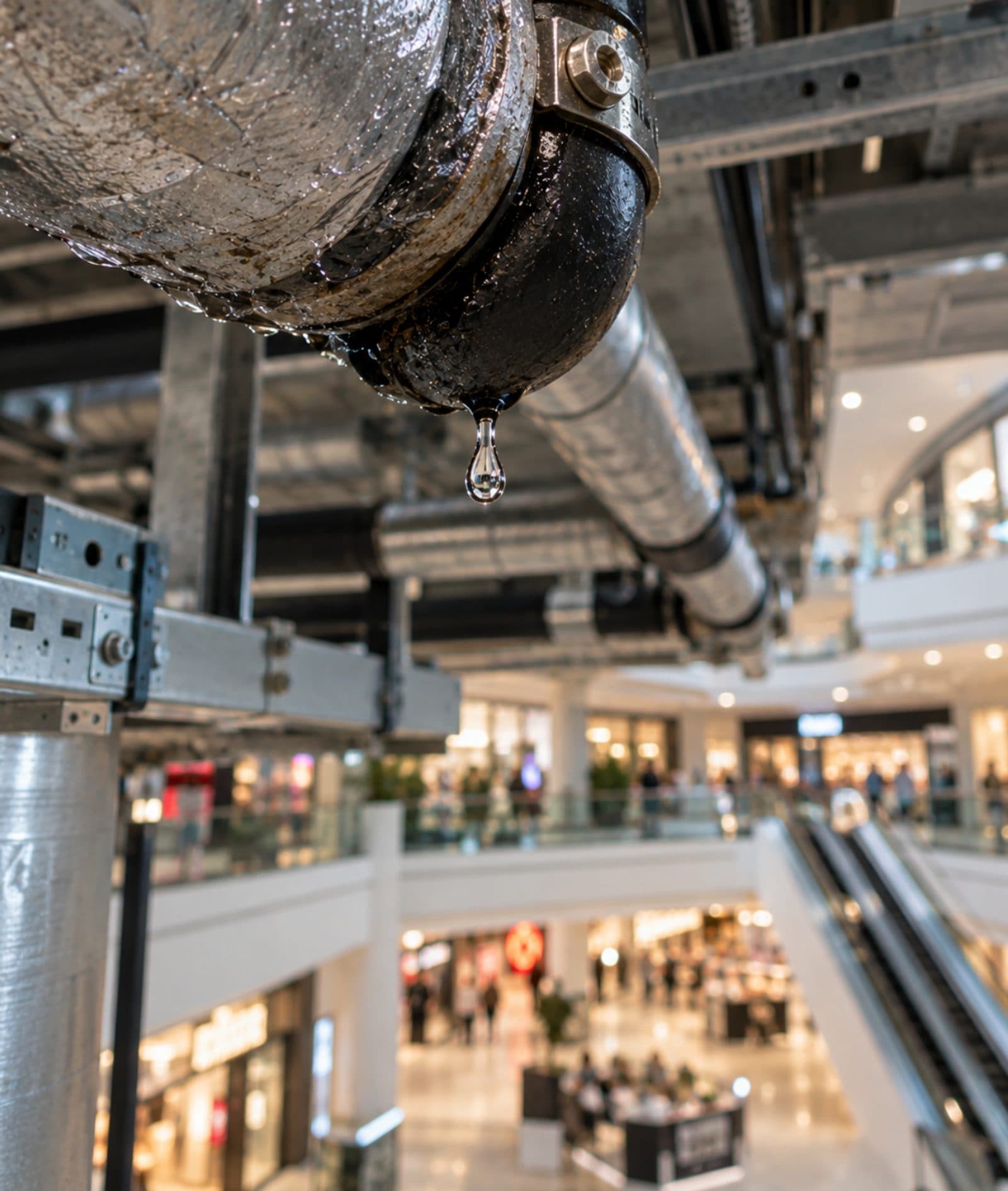
Most building failures do not happen without warning.
An HVAC system rarely goes from "perfectly fine" to complete breakdown overnight. Electrical installations do not suddenly become inefficient for no reason. Refrigeration equipment usually gives signs long before an emergency call-out is needed.
The problem is that many of those signs are easy to ignore.
A strange noise. A room that takes longer to cool down. An electricity bill that starts creeping up. Equipment that needs resetting more often. A small leak that "isn't causing any problems yet".
Until it does.
The most expensive maintenance is often the maintenance that was never done
In a commercial building, hotel, office, school, residential community or professional facility, an unexpected technical failure can quickly become much more than a repair bill.
It can cause discomfort for occupants, disruption to activity, emergency call-outs, equipment damage, lost productivity and difficult conversations with tenants, clients or management.
That is why effective maintenance should not simply be about repairing equipment when it breaks down.
It should be about preventing the failure from happening in the first place.
Preventive maintenance changes the question
Instead of asking:
"How quickly can someone fix this?"
Building managers should increasingly be asking:
"Could we have identified this problem earlier?"
Scheduled inspections allow technicians to monitor components, clean and adjust equipment, identify abnormal operation and detect potential faults before they turn into serious incidents.
The aim is simple:
Fewer surprises. Fewer emergency call-outs. More control.
At MRS Climatización, maintenance plans can be adapted to the building, its level of use, the number of units installed and how important those installations are to day-to-day operation.
Your equipment has a history too
There is another problem with traditional maintenance.
Information is often scattered.
One technician knows what happened six months ago. Another report sits in an email. An equipment reference appears in a spreadsheet. Nobody is entirely sure when a component was last replaced.
That is why the future of building maintenance is increasingly digital.
MRS is rolling out a digital maintenance environment in which HVAC and electrical installations can have their own equipment records, including intervention history, upcoming inspections, incidents and preventive alerts.
Instead of reacting to isolated problems, building managers gain a clearer view of what is happening across the installation as a whole.
Five warning signs worth investigating
Some problems are obvious. Others are much easier to miss.
Pay attention if you notice:
- An increase in energy consumption with no obvious explanation.
- Equipment running for longer than it used to.
- Unusual vibrations, noises, smells or temperature fluctuations.
- Repeated minor faults or resets.
- More complaints from occupants about comfort or performance.
None of these signs automatically means a serious failure is on the way.
But they are exactly the kind of indications that should prompt an inspection rather than be ignored.
Maintenance should protect how the building operates
The real purpose of technical maintenance is not simply to keep machines running.
It is to keep the building working properly.
HVAC needs to perform when temperatures rise. Electrical infrastructure needs to cope with the demands placed on it. Refrigeration equipment needs to maintain the conditions the activity requires.
That means maintenance has to consider much more than each piece of equipment on its own.
It has to consider continuity, safety, efficiency and operational risk.
The best breakdown is the one that never happens
Emergency repairs will always be part of building maintenance.
But they should not be the strategy.
A properly planned maintenance programme gives property managers greater visibility of their installations, helps to identify problems earlier and allows technical work to be scheduled rather than dictated by emergencies.
So perhaps the most useful question to ask about your building is not:
"Is everything working today?"
But:
"Do we know what is likely to fail tomorrow?"
Want greater control over your building's installations?
MRS Climatización provides preventive, corrective and increasingly digital maintenance solutions for HVAC, electrical and industrial refrigeration installations.
Talk to our technical team about creating a maintenance plan tailored to your building, your equipment and your operational needs.
Jason Leven
MRS Climatización